
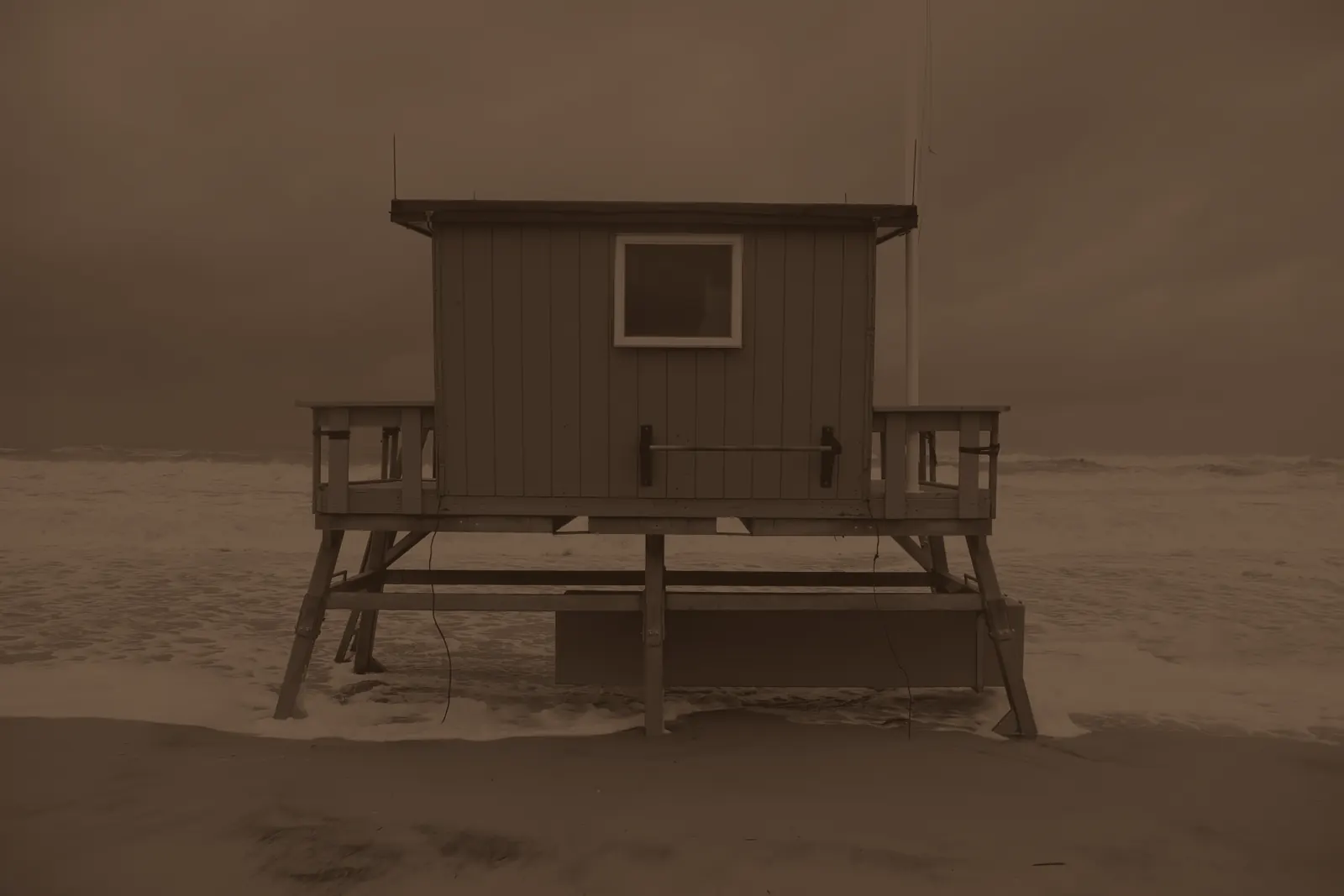
Hazards that close lodging properties
A useful first screen is FEMA's National Risk Index, which rates 18 natural hazards for every county and census tract in the country relative to all the others; how the scores are built is covered in the National Risk Index guide.1 The leading hazards change sharply by place. At the Lynn Hall Memorial Park sample in Lee County, Florida, the census tract's overall Risk Index rating is Relatively High, with hurricane rated Very High at a score of 99.2 and coastal flooding Relatively High at 98.7.2 At the Gatlinburg Welcome Center sample in the Smoky Mountains, winter weather rates Very High and inland flooding Relatively High.2
A tract rating describes a community, not your building. FEMA presents the dataset as a way to illustrate which communities face the most risk and to help users understand the hazards around them.1 Use it to decide which hazards deserve a site-level check for the property: the flood map, the coastal wind market, the wildfire class and the heat outlook, each covered below.
Flood coverage for a lodging building
The federal flood program treats most lodging as a business. FEMA's October 2025 manual places hotels, motels, rooming houses and tourist homes where guests normally stay under six months in its non-residential category, insured on the General Property Form.3 Each such building can carry up to $500,000 of building coverage and $500,000 of contents coverage, and a standard policy generally covers one building, so a property with several structures needs a policy for each; the full table of limits is in flood insurance basics.34
For a building whose replacement cost runs into the millions, those caps leave most of the value outside the federal program. The balance needs private flood coverage, which SBA lenders accept when it is at least as broad as an NFIP policy and meets their notice and cancellation terms.5 Non-residential policies also pay the higher $250 HFIAA surcharge each year.3
A bed and breakfast is the gray area. Under the manual, a single-family building stays residential when non-residential uses take up less than half its floor area; past that point it is written as non-residential.3 Ask the agent to state the occupancy on the quote, because it decides the form, the limits and the surcharge.
Commercial buildings have one flood option most homes lack. FEMA allows a non-residential building to be dry floodproofed, built watertight below the base flood elevation, instead of raised, and the work is documented on its Dry Floodproofing Certificate for Non-Residential Structures, form FF-206-FY-22-153.67 Ask whether the property has one and whether its flood barriers are still in working order.
Wind coverage on the coast
On the Texas coast, wind and hail cover for many commercial buildings is written by TWIA, the state-created Texas Windstorm Insurance Association. It operates in the 14 first-tier counties on the coast and in parts of Harris County east of State Highway 146.8 For a commercial risk, TDI's June 2026 overview gives a 2026 ceiling of $4,424,000 and a standard deductible of 1% for each item in each occurrence, with 2% or 5% choices that earn premium credits.8 TWIA accepts a building only after at least one licensed insurer has declined it, and anything built since January 1, 1988 must hold TDI's WPI-8 certificate showing it met the windstorm building code.8
The Stewart Beach sample on the Galveston seawall shows why those details matter: the point reads zone VE with a base flood elevation of 18 feet, and Galveston County has been part of 22 federal disaster declarations since 2000, 13 of them for hurricanes.29 A percentage wind deductible applied per building on a large property adds up quickly, as worked through in the guide to hurricane deductibles.
Heat and wildfire exposure
Heat lands in the operating budget and in guest reviews. In the Fort Myers Beach sample, the weighted mean of 32 downscaled climate models gives Lee County 5.3 days each year hotter than 95°F for 1976-2005, against 60.2 days under the medium-emissions pathway RCP4.5 and 84.9 under the high-emissions pathway RCP8.5 for 2036-2065.2 USGS describes downscaling as translating coarse global model output to a finer grid, and RCP8.5 as a future that could match limited or no climate mitigation; these are scenario results, not forecasts, as the extreme heat guide explains.10 Ask for the age and capacity of the cooling plant, the backup power, and three summers of utility bills.
In fire country, a property can lose nights to damage or to an evacuation order. The Big Bear Alpine Zoo sample in San Bernardino County, California, sits in a Non-burnable cell of the Forest Service's Wildfire Hazard Potential map while FEMA rates its census tract Relatively High for wildfire, and the county appears in 40 federal disaster declarations since 2000, 28 of them for fires.29 The Forest Service calls the map an index of the relative potential for intense wildfire that would be hard to control, and says it is neither a forecast nor a direct measure of risk to a building; the classes are covered in the wildfire guide.11 NIST's fire research identifies burning embers, also called firebrands, as major sources of house ignitions in wildland-urban interface fires, which is why roofs, vents and landscaping near the buildings deserve a look.12
Business interruption and contingent losses
Business interruption insurance, also called business income coverage, replaces the income a business does not earn while it is closed because its own property was physically damaged by a covered cause, through a period of restoration needed to repair it.13 Florida's Department of Financial Services notes three limits worth checking: benefits usually begin only after a waiting period of 48 to 72 hours, most policies leave out the extra time needed to meet a new building code, and closures caused by lost electricity, gas or water, by flooding or earthquakes, or by partial closures may not be covered.13
Contingent, or dependent, business interruption pays for income lost when a direct supplier's or customer's property is physically damaged, rather than your own.13 Civil authority coverage applies when damage to another property leads officials to block access, and that order also cuts off access to your business; service interruption coverage applies when damage to a utility's equipment shuts you down.13 Read how each policy defines suppliers and customers, and whether an evacuation order with no physical damage triggers anything at all.
The flood gap shows up again here. NFIP policies do not pay financial losses caused by business interruption, so a lodging owner's income protection for flood depends entirely on the private policy's wording.4 Keep three years of income statements, occupancy reports and utility records ready; Florida's guide stresses that accurate income and expense records drive the size of a business interruption payment.13
Lender and SBA requirements
Smaller lodging purchases can be financed with SBA 7(a) or 504 loans. SBA's standard operating procedure SOP 50 10 8.1, effective October 1, 2026, requires hazard insurance at full replacement cost on all collateral for loans over $50,000, plus a separate policy where the state requires added coverage such as wind, hail or earthquake.5 Flood rules follow FEMA's standard flood hazard determination: if any part of a collateral building lies in a Special Flood Hazard Area, the borrower must insure the building, and any pledged equipment, fixtures or inventory inside it, through the NFIP or a comparable private policy, for at least the loan balance or the NFIP maximum available, whichever is less.5
The same procedure calls for an environmental investigation of every commercial property offered as security. It also lists hotels, motels and other lodging among limited or special purpose properties, which raises the borrower's contribution in a 504 project to at least 15%, or 20% for a new business.5
Larger lenders add physical reviews. Fannie Mae's multifamily guide, written for apartment lending, defines a property condition assessment as a review of a property's physical condition and historical operation. It also requires a seismic check where USGS data show peak ground acceleration of 0.15g or more, and a full seismic risk assessment when a structural risk factor such as unreinforced masonry appears.14 Hotel lenders set their own terms, so ask yours early which assessments it will order; earthquake data are covered in the earthquake guide.
Seller questions about past storms
Under FEMA's substantial damage rule, if past storm repairs cost half or more of the building's pre-disaster market value, the building had to be brought up to the floodplain rules in force, and a permit was required for any repair inside the flood hazard area.15 Ask for the paper trail along with the operating history.
- Every closure since the seller took over: dates, cause and room-nights lost.
- Each property, flood, wind and business interruption claim, with amounts paid and the deductibles applied.
- Any FEMA grant or SBA disaster loan for the property. FEMA says past federal disaster aid carries a duty to keep flood insurance that stays with the property.16
- Repair permits, substantial damage letters, and any Elevation or floodproofing certificates from past work.15
- Current flood and wind declarations pages, deductibles in dollars, and any notice of non-renewal.
- Generator, pump and flood barrier capacity, with maintenance records.
- Evacuation orders that emptied the property and how guests were told.
Hotel sites in an Avantosa report
For a single lodging site, whether an inn, a motel, a hotel or a B&B, Avantosa reads the point against FEMA's flood map and the USGS elevation service, then adds the tract's National Risk Index ratings, the county's disaster declarations and NFIP claims since 2000, nearby storm tracks, the wildfire class, the heat projections and NOAA's sea level rise screening layers, citing each dataset.1 It supports your due diligence; it is not an engineering survey, a property condition assessment or an insurance quote. A lodging report on one site is $500, so you can order it for the property under contract or study the layout in the Biloxi sample.
Questions about hotel climate due diligence
How much flood insurance can a hotel get from the NFIP?
Does business interruption insurance cover hurricanes?
It can, when the storm physically damages the property through a covered cause and the waiting period has passed. Florida's Department of Financial Services names flooding among the events such coverage may not pay for, so read the surge and flood wording.13
What is contingent business interruption insurance?
Coverage for income you lose because a direct supplier's or customer's property was physically damaged, as opposed to damage to your own property. Florida's guide counts suppliers that cannot deliver, customers that cannot accept your services, and companies that can no longer refer customers to you.13
Does an SBA loan for a hotel require flood insurance?
Yes, when any part of a collateral building is in a Special Flood Hazard Area; SBA requires NFIP or comparable private coverage on the building and on pledged contents inside it. The amount must equal at least the loan balance or the NFIP maximum available, whichever is less.5
Is a bed and breakfast insured as a home or a business for flood?
It depends on the floor area. A single-family building stays residential while non-residential uses take less than half of it, and tourist homes with short guest stays are listed as non-residential.3
Sources
- FEMA, National Risk Index dataset FAQ, December 2025 (v1.20), read 2026-11-27.
- Avantosa engine readings for the Lynn Hall (Fort Myers Beach), Gatlinburg, Stewart Beach and Big Bear sample addresses, read 2026-11-27.
- FEMA, October 2025 NFIP manual: building occupancies, coverage caps and surcharges (archived copy read 2026-11-27).
- FloodSmart, commercial flood coverage and items NFIP policies exclude (archived copy read 2026-11-27).
- U.S. Small Business Administration, SOP 50 10 8.1, Lender and Development Company Loan Programs (effective October 1, 2026), read 2026-11-27.
- FEMA, NFIP Elevation Certificate and Instructions, 2022 edition: floodproofing note, read 2026-11-27.
- FEMA, NFIP underwriting forms list, read 2026-11-27.
- Texas Department of Insurance, Texas Windstorm Insurance Association Overview (June 8, 2026) (archived copy read 2026-11-27).
- FEMA OpenFEMA, Disaster Declarations Summaries v2, read 2026-11-27.
- USGS Open-File Report 2020-1058, Using Information From Global Climate Models to Inform Policymaking, read 2026-11-27.
- USDA Forest Service, Wildfire Hazard Potential for the United States (270-m), version 2023 (archived copy read 2026-11-27).
- NIST, Reduced Ignition of Building Components in Wildland-Urban Interface Fires, read 2026-11-27.
- Florida Department of Financial Services, business interruption coverage guide for business owners, read 2026-11-27.
- Fannie Mae Multifamily Selling and Servicing Guide, Section 505 Seismic Risk and glossary, read 2026-11-27.
- FEMA, substantial damage questions and answers (Fact Sheet 016), read 2026-11-27.
- FloodSmart, flood insurance after federal disaster assistance (archived copy read 2026-11-27).