
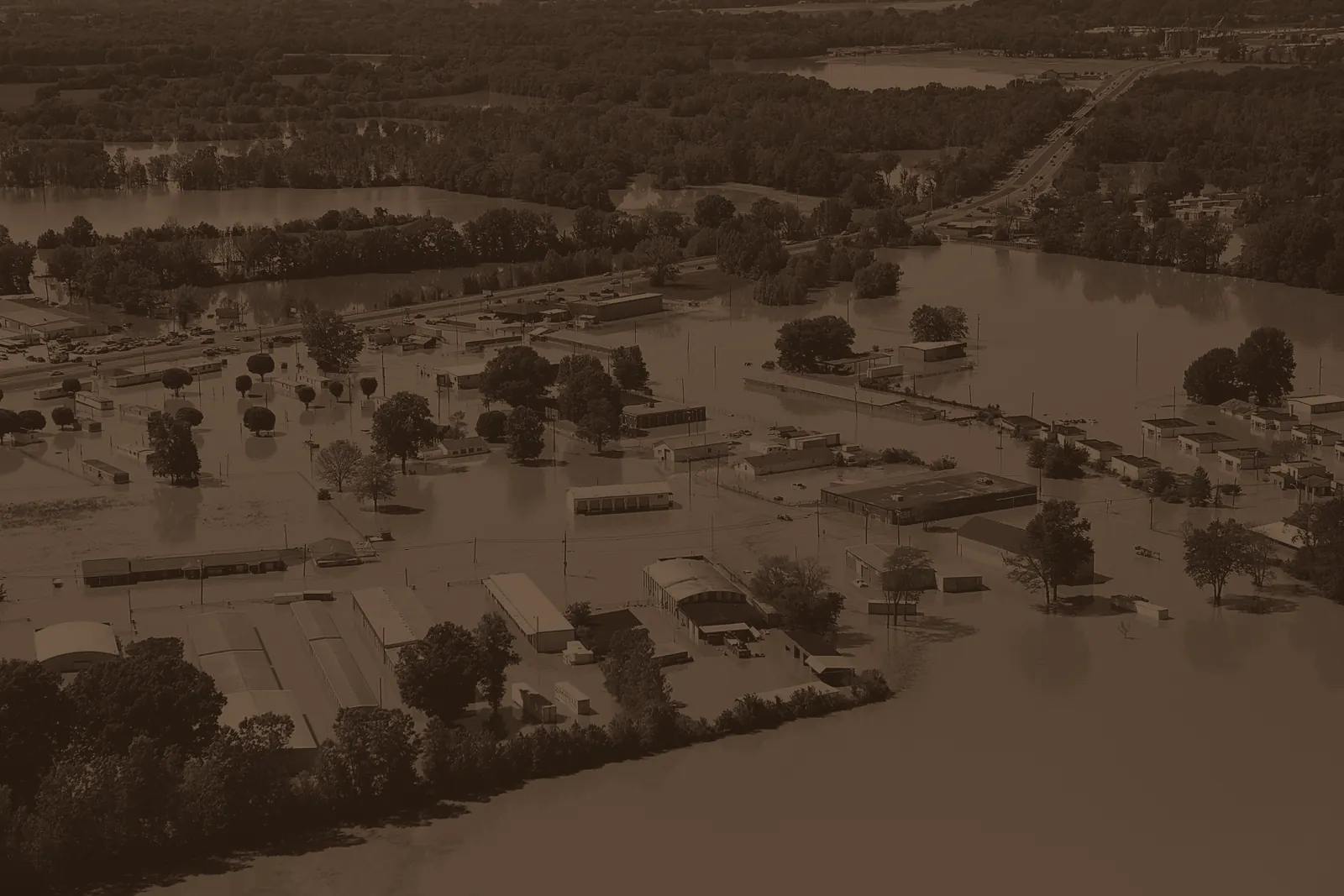

What the zone means for your mortgage
The Flood Disaster Protection Act of 1973 made flood insurance a condition of federally backed lending: those lenders may not lend against a building inside a Special Flood Hazard Area (SFHA) unless the building is insured against flood, and the rule covers every community enrolled in FEMA's flood insurance program, the NFIP.1 The SFHA is FEMA's high-risk flood area, and Fannie Mae counts every zone beginning with A or V as part of it; the letters and the flood behind them are decoded in the flood zone guide.2
Your lender settles the question with its own determination on FEMA's standard form, not with a listing sheet or a research report.2 On a one-to-four unit property, Fannie Mae wants the smallest of three figures: what it would cost to rebuild the improvements, the most the NFIP will sell for that building, or the principal still owed.2 A lender can also insist on flood insurance for a building outside the SFHA, and FEMA's manual notes that lenders have that discretion.1
One rule travels with the property rather than the owner. A building that has received federal disaster assistance, including FEMA grants and SBA disaster loans, must carry flood insurance to qualify for aid again, and FEMA says a buyer of that building inherits the requirement.3 Ask the seller in writing whether the property ever received either.
Here is what a high-risk reading looks like. In the Avantosa sample for Lynn Hall Memorial Park, 950 Estero Boulevard in Fort Myers Beach, FEMA's map reads zone VE and a base flood elevation of 14 feet, from a panel that took effect November 17, 2022, while USGS puts the ground at that point at 5.1 feet.4 Compare figures like these only when both use the same vertical datum, which FEMA's rating rules require for the elevations being compared; an Elevation Certificate records that datum for a building, as the certificate guide explains.1
How the NFIP treats a vacation rental
A single-family vacation home, a condo unit or a two-to-four unit building is normally insured on the NFIP Dwelling Form, with the residential building and contents ceilings listed in flood insurance basics.1 Two terms in that form hit a rental harder than a primary home.
The first is how a building loss is paid. When the home is not the policyholder's principal residence, the Dwelling Form settles building damage at actual cash value, so depreciation comes off the payment for an aging roof, kitchen or floor even when the building is insured to its full value.5 The second is guests' belongings. Contents coverage protects property you and your household own, and it extends to property owned by guests only if you choose that option.5
The yearly surcharge differs too. The HFIAA surcharge on an NFIP policy is $25 for a primary residence and $250 for a home that is not the policyholder's primary residence, per the surcharge table in the October 2025 manual.1
Small multi-unit rentals need a careful read. In the manual, the two-to-four family and other residential categories leave out buildings where a guest's normal stay is shorter than six months, and the non-residential category takes in apartment buildings, rooming houses, tourist homes, hotels and motels with stays that short.1 For a duplex or a small building run as nightly rentals, ask the agent which occupancy the quote uses, since the occupancy decides the policy form and the limits.
Lost bookings and rental income
An NFIP policy pays for direct physical flood damage and nothing that flows from it. The Dwelling Form excludes lost revenue or profits, loss of access, loss of use, interruption of business and the extra living costs while a building is repaired.5 FEMA's consumer guidance lists temporary housing and business interruption losses among the costs its policies never pay, whatever caused the flood.6 The nights you cancel after a flood are a cost you carry.
Rental income protection has to come from a separate policy. Business income coverage replaces income a business loses while it is closed after damage to its own property, but Florida's Department of Financial Services warns that flooding is among the causes such policies may not cover, along with utility outages and partial closures.7 Before you rely on an income endorsement, ask the insurer to show you, in the policy text, whether flood and storm surge are covered causes and how many months it pays.
Plan for a long closure. Florida's guide notes that in most business income policies the restoration period does not stretch to cover extra time spent meeting a newer building code, so a rebuild that must meet current flood rules can run past the paid period.7 The mortgage, taxes, insurance, association dues and utilities keep running while the unit is dark.
Storm repairs, permits and the 50 percent rule
After a flood or hurricane, any repair to a building in the SFHA needs a permit, whatever the damage, and local officials decide whether the building is substantially damaged.8 FEMA's test is whether restoring the building to its pre-disaster condition costs 50% or more of its pre-disaster market value. If it does, the whole structure must be brought up to the community's floodplain rules, which can mean raising, moving or demolishing it, and damage from straight-line winds or tornadoes counts toward the total along with flood. Some communities use a stricter trigger, such as 45%.8
If the rental's NFIP policy includes building coverage, it comes with Increased Cost of Compliance coverage, worth up to $30,000 toward that work when the community enforces its substantial damage rule on the building.5 It does not cover the lost season.
Short-term rental licensing is set city by city and county by county, so ask the local office instead of assuming. Does the rental license or registration stay valid while the unit is damaged? Is an inspection required before guests return? Did past storms produce substantial damage findings on this street? FEMA points owners to the local floodplain administrator or building department for the damage questions.8
Guest safety and evacuation
Water is the main danger to people in a coastal storm. The National Hurricane Center calls storm surge the leading cause of hurricane deaths, notes that surge can travel up rivers and canals far inland, and ties 41 deaths to the surge from Hurricane Ian in 2022, the storm that struck Fort Myers Beach.9
Away from the beach, the danger is the drive. The National Weather Service reports that over half of flood-related drownings happen when a vehicle is driven into floodwater, that 6 inches of fast-moving water can knock an adult down, and that 12 inches of rushing water can carry away most cars.10
Write the plan into the house manual. Give the address's hurricane evacuation zone, which the local emergency management office publishes.11 Explain the two alerts guests will hear. Hurricane Center watches go out 48 hours before tropical-storm-force winds are due and say hurricane conditions could develop; warnings go out 36 hours ahead and say those conditions are on the way.12 Add the route off the island or beach road, and state that guests must leave when officials order an evacuation. Then set the cancellation policy so a watch or warning gives guests a clear answer.
Booking seasons and hurricane season
The Atlantic hurricane season runs from June 1 to November 30. Its peak falls around September 10, and most activity comes between mid-August and mid-October; the eastern Pacific season runs from May 15 to November 30.13 Hawaii falls under the Central Pacific Hurricane Center, which gives June 1 to November 30 as the season and notes that tropical cyclones can form in any month.14 Lay your market's booking calendar over those dates before you set a revenue plan.
Insurance timing matters as much as booking timing. In a 2009 notice, Alabama's insurance department said most insurers in that state would not bind new coverage once a storm had moved west of 80 degrees longitude or north of 20 degrees latitude, a point just south of central Cuba.15 Binding rules vary by company and state, so close with the wind and flood policies bound, not pending.
Due diligence checklist for a flood zone rental
Work through these before your financing and inspection deadlines.
- Lender's determination. Ask for it early; it decides whether insurance is required and whether any outbuilding counts.2
- Seller's NFIP policy. Ask for the declarations page. The seller can assign the policy to you by signing on or before closing, which may preserve a discounted rate.1
- Elevation Certificate. Ask the seller and the community floodplain office for one; FEMA uses the first floor height that gives the lower premium.1
- Claims history. Have the seller request the free LexisNexis claims history on the property, because a buyer cannot order it; how those reports work.16
- Condo master policy. For a unit, confirm the association insures the building for flood. Fannie Mae requires an association policy or equal private coverage for attached condo buildings in the SFHA.2
- Wind deductible. Get it in dollars, not only as a percentage; the math is in the hurricane deductible guide.
- Permits and past damage. Ask the building department for permits pulled after past storms and any substantial damage letters.8
- Rental license. Confirm its status and any inspection required after storm repairs with the city or county.
- Reserves. Hold cash for the wind deductible, the flood deductible and several weeks without bookings.
What an Avantosa report shows for a rental address
A rental buyer's report from Avantosa reads the address against FEMA's flood map layer for its zone and base flood elevation, adds the USGS ground height, NFIP claim counts for the county and ZIP since 2000, every federal disaster declaration that included the county since 2000, past hurricane and tropical storm tracks near the address, and NOAA's screening maps for sea level rise, with a source beside each line.17 It shows where the map puts the property; the lender's determination still decides the loan condition. A report on a home costs $350, and you can order one for the rental you are considering or first read how the Fort Myers Beach sample lays it out.
Questions about short-term rentals in flood zones
Do I need flood insurance to buy an Airbnb in a flood zone?
If the building is in the SFHA and the loan comes from a federally backed or regulated lender, yes; the law bars that lender from making the loan unless the building is covered by flood insurance.1 A cash buyer is not bound by that rule, but a building that received federal disaster aid before must stay insured to remain eligible for future aid.3
Does NFIP flood insurance pay for lost bookings?
Will the NFIP pay replacement cost on my vacation home?
Usually not for the building. For a second home or rental that is not where you mainly live, the Dwelling Form pays actual cash value, so depreciation is subtracted from the payout.5
Can I take over the seller's flood insurance policy?
Yes. The seller signs the assignment no later than closing day, and the new owner has 30 days from closing to get it to the insurance company. A buyer may also keep a discounted premium the seller was receiving.1
When does a flood policy bought at closing start?
When the policy is tied to the mortgage, coverage begins at the moment of closing instead of 30 days later, provided you applied by closing day and the insurer gets the money inside the manual's payment windows.1 Those windows are spelled out in flood insurance basics.
Sources
- FEMA Flood Insurance Manual (October 2025 edition): occupancy, surcharge, assignment and lender rules (archived copy read 2026-11-27).
- Fannie Mae, single-family flood insurance requirements, Selling Guide topic B7-3-06, read 2026-11-27.
- FloodSmart (FEMA): eligibility, lender requirements and the disaster assistance rule (archived copy read 2026-11-27).
- Avantosa sample report for 950 Estero Blvd, Fort Myers Beach: FEMA NFHL zone and USGS elevation readings, read 2026-11-27.
- FEMA Dwelling Form policy text (F-122, 2021): loss settlement, contents and exclusions (archived copy read 2026-11-27).
- FloodSmart (FEMA): what NFIP policies cover and leave out (archived copy read 2026-11-27).
- Florida Department of Financial Services, Protecting Your Business: Business Interruption Coverage, read 2026-11-27.
- FEMA Fact Sheet 016, Frequently Asked Questions: Substantial Damage (September 28, 2026), read 2026-11-27.
- NOAA National Hurricane Center, storm surge overview, read 2026-11-27.
- National Weather Service, Turn Around Don't Drown, read 2026-11-27.
- National Weather Service, What to do before a tropical storm or hurricane, read 2026-11-27.
- NOAA National Hurricane Center, glossary of watch and warning terms, read 2026-11-27.
- NOAA National Hurricane Center, tropical cyclone climatology and season dates, read 2026-11-27.
- NOAA Central Pacific Hurricane Center, about the center, read 2026-11-27.
- Alabama Department of Insurance, advice to coastal residents on coverage (August 15, 2009) (archived copy read 2026-11-27).
- Alabama Department of Insurance, Information for Consumers: What is a C.L.U.E. report? (archived copy read 2026-11-27).
- FEMA, National Flood Hazard Layer (updated April 3, 2025), read 2026-11-27.